Showing posts with label Teethcare. Show all posts

Sunday, August 21, 2011

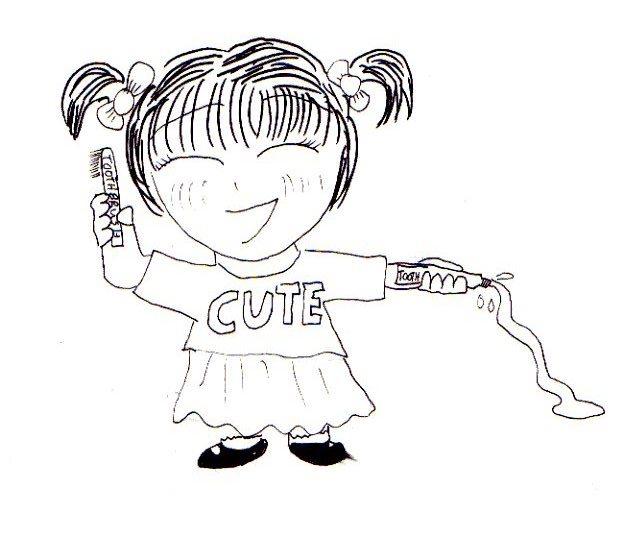
Caring for your Child's Teeth

By Aishwarya Jayadeep

Many believe that caring  for a child's teeth isn't as important as caring for secondary or permanent teeth. As they think that milk teeth or primary teeth are going to be replaced by nature with another set of teeth soon.If that's what you  thimk that's one big mistake on our part as parents. I believe that Milk teeth or primary teeth is that set of teeth kids get to practice on how to take care of  permanent teeth . That way, when the time comes for them to take care of  their permanent teeth they are well practiced in tooth care. Thus, they won't make any mistakes and can  have  them life long .
Ways to care for your babies teeth
1. Clean your infant's gums with a clean damp cloth.
2. As soon as the first teeth come in, begin brushing them with a small soft-bristled toothbrush and a pea-sized dab of fluoride toothpaste.
3. To avoid baby bottle tooth decay and teeth misalignment due to sucking, try to wean your child off of the bottle by one year of age and monitor excessive sucking of pacifiers, fingers and thumbs.  Never give your child a bottle of milk, juice or sweetened liquid as a pacifier at nap-time or bedtime.
4. Help a young child brush at night- the most important time to brush due to lower salivary flow and higher susceptibility to cavities and plaque.  What I advice is to let the child brush by themselves in the mornings to build self-confidence. This is so, as in the mornings there won't be any food debris or plaque to remove as the child was given a brushing by the parent in the night.  Usually by age five or so, the child can learn to brush his or her own teeth with proper parental guidance.
5.I also have found dental floss with holders very helpful in flossing a  child's little teeth with your big hands.
6.  Finally, the best way to teach a child how to brush is to lead by good example. Allowing your child to watch you brush your teeth teaches the importance of good oral hygiene. Yet another reason for you to brush twice a day.

Sunday, August 14, 2011

Selecting Toothbrushes


Cartoon by Aishwarya Jayadeep
Structure of a Tooth
Selecting a tooth brush is something that should be done with utmost care. Or else, a tooth brush that's supposed to help you retain that pretty smile of yours would do you more harm than you can imagine. My mom and my mother in law are the two people I have seen who take a serious interest in the maintenance of their pearly whites, but sadly their ignorance of this crucial aspect led to the deterioration of their gum's health. Both these ladies used to vouch on their hard-bristle tooth brushes for doing a better cleaning job than any other. What they ended up with are receded gums and tooth sensitivity because of exposed dentin. To make it more clear how it happens, please look at the figure. Usually, the exposed part (Crown) of the tooth is protected with enamel. But this protection is not there from the point the gum starts. So what happens when one uses hard-bristled toothbrush is that it pushes the gum back, thus exposing that part of the sensitive dentin. This would make it painful if you were to take hot or cold liquids. But more than the pain, once the dentin part is exposed, if you continue using the hard-bristled brushes, the brushing would erode the dentin itself (as these are not as resistant to abrasion as the enamel is). What this means is that you could even end up having fresh cavities.

Now the question is how to select a toothbrush that is best suited for you.
Tooth brushes have different bristle firmness ratings – soft, medium, and hard. This tells you how firm the bristles are and how much pressure they put on your teeth and gums when you brush. This can be very confusing when you select a toothbrush. Most people, like my mom and MIL , select toothbrushes with firmer bristles, believing they’ll do a better job of cleaning their pearly whites. Then these zealots would brush their teeth vigorously to clean it to a fault. As I mentioned earlier all of that brushing causes gum irritation and aggravates sensitive teeth. or even ends up making new cavities in some cases. So to select the right toothbrush that does the right work without causing more harm make sure that:

  1. Any toothbrush you choose have soft bristles. Soft toothbrush gets the job done without gum irritation or contributing to receding gums.
  2. Select a toothbrush head size that can easily fit into the mouth and can brush one to two teeth at a time (the general size is 1" long and ½" wide) with end-rounded bristles
  3. Powered toothbrushes are better choices than manual toothbrushes for anyone who needs assistance brushing teeth, including seniors, people with arthritis (or any condition that may limit mobility), anyone wearing braces or people with misaligned or uneven teeth surfaces that make a thorough cleaning more challenging. These would be a good choice for kids who has teeth that are a mix of baby teeth and adult teeth.

Now the next question is when to replace your tooth brush.

  1. Replace your toothbrush as soon as the bristles begin to look worn or frayed (usually every three months). A worn toothbrush does not do a good job of cleaning your teeth. 
  2. Remember always to replace your toothbrush after an illness. Otherwise, your brush will be retaining the germs that caused the illness and you may fall sick again.

For children, most of the above holds good. And specifically select a brush that has:

  1. Soft bristles (for gentle cleaning)
  2. Very small heads (designed for baby teeth)
  3. Large handles (easier for children to grip)
And from my experience, when the child is having mixed teeth (some adult and some baby teeth), a powered toothbrush with soft bristles, specially for kids would work best.


Keep Smiling!